
There are crumbs of comfort for the Lions as they watch their injury list grow. The Super 14 is taking its toll too on South Africa's top players, with utility back François Steyn suffering a knee injury and full-back Conrad Jantjes breaking his leg. They will miss the Test series.
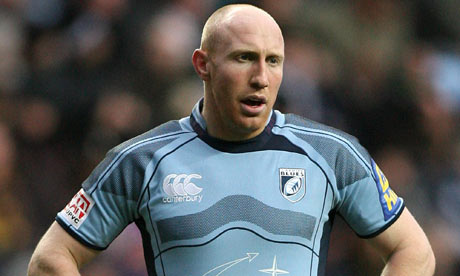
They are but crumbs. No sooner had the Lions blasted forth their fanfare and named their squad of 37 than they began to fall over. First it was Tomas O'Leary with a broken ankle, then Tom Shanklin with a dislocated shoulder against Newport Gwent Dragons.
Was Shanklin really required for a Wednesday night Magners League derby so soon after the Heineken Cup semi against Leicester? Well, this was more than just an end-of-season dogfight. This was a rather desperate scramble by both Welsh regions for automatic qualification for next season's Heineken Cup.
As David Young, the Cardiff Blues coach, pointed out, there would have been many accusations aimed at him of devaluing a tournament if he had rested his Lions. Exposure to risk is a sign of healthy competition.
It underlines the need for anybody on Lions stand-by – and even those, such as Steve Borthwick, who are not – to keep in shape. They are but somebody else's tweak away from a ticket south.
Then there is the mysterious case of Alan Quinlan. Never in the field of rugby justice has there been such a contrast between the alacrity shown by the Irish to go into denial about any contact between the Munster player's fingers and the eyes of Leinster's Leo Cullen and the slowness to convene a disciplinary hearing. Nobody, apparently, had any notion at the time of what went on. Not Paul O'Connell, the Munster captain, who was too busy playing. Not Tony McGahan, or Michael Cheika, the two coaches. Not even Cullen, the victim. He simply couldn't believe Quinlan would be capable of one of the game's taboo sins . It was a quite beautifully marshalled exercise in rank-closing. For 80 minutes Munster and Leinster had been at their most tribally divided, spiteful even, in their duel. But the moment the final whistle blew, they rebuilt Irish solidarity around Quinlan. Nobody had seen anything, but they were certainly briefed that a storm was coming their way. Players tend to shoot from the hip when the sweat is still dripping on their brow.
Setting the second Wednesday after the Croke Park epic for Quinlan's trial suggests that no suit in authority is particularly keen to get to the bottom of the business, either, despite the slightly disturbing trend of the finger in the eye becoming the tool of choice. Unlike the haymaker, it requires no backswing. It can be administered (without anaesthetic) in the blink of an eye. Or rather, between the blinks of an eye.
It is as if someone has shut the door on the video footage and is rather hoping that when the vault is reopened the prosecution's evidence will have mysteriously disappeared. It has happened before. When Arthur Emyr became head of sport at BBC Wales, all footage of his shanked, daisy-cutting drop goal attempt against Australia in 1991 vanished. History can be rewritten.
There is no denying that delaying does work. The greater the distance between an incident and its resolution in court, the less heinous it becomes, especially if what is fading into history is overtaken by a rash of different events. Shanklin's shoulder may yet support Quinlan's cause.
On the other hand, the way Tom Croft played for Leicester in the second Heineken Cup semi, the one played to its shoot-out conclusion last Sunday, served only to place a certain extra pressure on Quinlan. On that kicking note, by the way, I've got to say how riveting the kicking competition was. I know the players have since voiced doubts about it, but it worked for the onlooker. And since the draw in rugby is a rarity, the agony endured by Martyn Williams won't become commonplace.
Croft was in the second row and was spared a shot at goal, but must have been in contention for a slot at No6 in the Lions party. That's where Quinlan plays. It's all very complicated. There's no denying that Croft and Quinlan are very different types of player and that Ian McGeechan obviously fancies the Irishman as a key character in the midweek team, the side that must keep on smiling through the kickings for the good of overall morale.
But Croft is in brilliant form, fast, elastic and industrious. He may be too good for the midweek team. If there's not a place for such an athlete on dry grounds then we may as well all pack up and poke a pig in the eye.
The Lions have lost two and have a show-trial to come. There may still be trouble ahead with a pair of finals to ... well, I was going to say endure, but surely we must be able to enjoy our showpieces without worrying too much about the tour beyond.
It has become a problem for the Lions. Creating a team out of four rivals lends itself to over-analysis and worry. Perhaps we should all sit back and just let the entertainment flow. Somebody is going to be hurt and somebody is going to be spending an anxious day or two waiting for the citing officer to file. It's the nature of things, in Ireland, Britain and South Africa. Perhaps we shouldn't have let the trumpeter blow so hard when the first batch of Lions names were read out.
