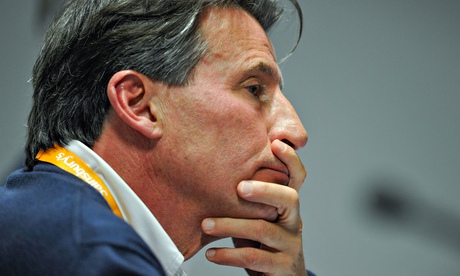
Sebastian Coe, the newly appointed president of the embattled governing body of world athletics, is to be summoned by the parliamentary select committee that inadvertently forced Paula Radcliffe to defend herself from doping allegations.
The International Association of Athletics Federations, which has sought to robustly defend its actions in the wake of claims that it failed to follow up on hundreds of suspicious tests over a decade, is believed to be frustrated that it was unable to respond to claims made in Tuesday’s hearing of the culture, media and sport select committee.
Meanwhile Radcliffe, feeling her position had been made untenable by a question from the committee’s chairman, Jesse Norman, emphatically denied cheating in a lengthy 1,700-word statement and turned on the Sunday Times and its experts.
Amid the fallout from Radcliffe’s dramatic statement, Gerard Hartmann – the marathon world record holder’s physical therapist for 14 years – told the Guardian he had no doubt she was clean. “I would bet my house – in fact everything I have – that Paula Radcliffe never crossed the line during her career. That she never took any banned performance-enhancing drugs,” he said in a column.
“That she became the greatest female marathon runner in the world through incredible hard work, genetics and a relentless drive to be the best. And if anyone had a Bible to hand, I would even swear on my life that she was clean. That is how confident I am about Paula.”
Coe, who won the vote to become IAAF president against a backdrop of snowballing allegations of systemic doping and has faced criticism for calling the allegations a “war on my sport”, will be under pressure to explain his stance.
“The plan will be to hold another session in the next couple of months and to have Sebastian Coe there,” said Damian Collins, the Tory MP who sits on the select committee.
“I think the ‘declaration of war’ remark was inappropriate. The UK Anti-Doping president suggested it was because he [Coe] was standing for the IAAF presidency – what we want to understand is what he actually thinks now he is president of the IAAF.”
The IAAF has argued that any blood values taken before 2009 cannot be used as proof of doping and has rejected claims it failed to follow up on suspicious values.
Dr Mike Ashenden, the respected anti-doping expert used by the Sunday Times to analyse the leak of 12,000 results from 5,000 athletes, told the committee he believed the IAAF was “simply overwhelmed” by the scale of the problem.
An independent ethics commission review into widespread endemic doping in Russia and a wider World Anti-Doping Agency report into the issues are both due to report soon.
Norman, the chair of the committee, on Wednesday defended his role in the affair, bizarrely claiming the “press pack” were a “herd of ungulates” who had bounced Radcliffe into speaking out by taking a snippet of his question out of context.
But in an interview with Sky News, Radcliffe said Norman alluded to past winners or medallists of the London Marathon and “in that period, aside from in the wheelchair race, it only could be me, so essentially he identified me”. She added: “Then people had free rein because of the parliamentary privilege to go ahead and name me in the press.
“At that point, I am not prepared to be blackmailed by the paper in question any more on this matter and I am going to go out and defend myself.”
Meanwhile, Mo Farah – another British athlete forced to defend himself in the wake of doping allegations levelled at his coach Alberto Salazar – has called for longer bans for drugs cheats.
Farah, who was not accused of any wrongdoing in BBC’s Panorama documentary, has vowed to stick by his coach unless any allegations are proven. But asked by Piers Morgan on his Life Stories programme, due to air on Friday, for his thoughts about the suspicion that successful athletes have taken something illegal, he said: “It does annoy me a lot. The whole reason I moved to the US to be coached by Alberto Salazar is to be able to improve one or two per cent. I was sick of coming sixth in the world, seventh in the world, and get close to a medal, but not quite there, half a second, and that’s why I moved to the other side of the world, and my training and a lot of stuff has changed, so people automatically think … sometimes it frustrated me.”
The double world champion repeated his insistence that he would never take an illegal substance, adding: “I don’t see it … and for me, I’ve won a lot of medals, I’m clean and I can’t do it. I’d never do that.”
